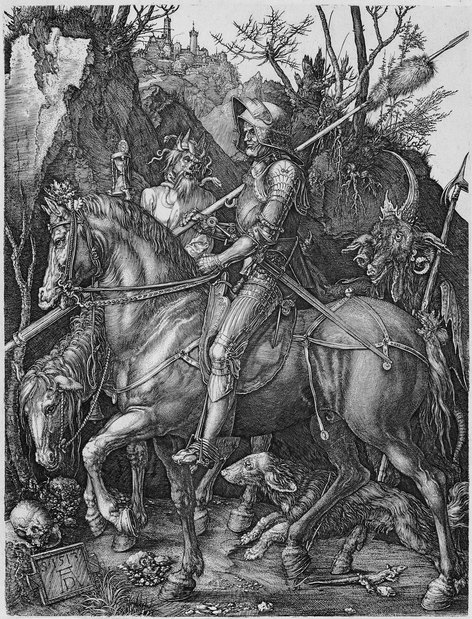
Albrecht Durer, Knight, Death and the Devil, 1513
Copper engraving on paper, 25 × 19.6 cm
Digitized by miscLab
Core Technologies
Reflective Originals
Reflective original scanning is high-precision digitization for opaque originals. It covers artworks, cultural heritage, paper documents, photographs, books and physical surface records. miscLab adjusts capture methods, lighting strategies, color management, file specifications and post-processing according to object size, material, surface texture and final use. Related equipment and software are collected under Lab Equipment.
I. Basic Information on Reflective Original Digitization
Default Files
Primarily TIFF master files; derivative files for archiving, restoration, reproduction or publication can be provided as needed.
Bit Depth
16-bit workflow to preserve more room for restoration, color correction and reproduction.
Color Management
Uses an ICC profile specific to the current capture environment, with CDSG color targets used during capture for correction. ICC profiles are updated when system components change.
II. Suitable Objects and Media
Artworks, archives and visual materials that can be digitized include, but are not limited to:
Paintings
Oil paintings, ink paintings, prints, drawings, movable and immovable murals, etc.
Calligraphy and Rubbings
Calligraphy works, inscription rubbings, seal carvings, ink works on paper, etc.
Photographs
Historic photographs, darkroom prints, fine-art inkjet works, photographs in printed matter, etc.
Books
Rare books, ordinary books, catalogues, artist books, photobooks, etc.
Special Image Media
Polaroids, peel-apart film and similar opaque or translucent media are usually handled as reflective originals.
Institutional and Collector Archives
Flat or shallow-relief visual materials in museums, archives, art museums, libraries, private collections and digital archive projects.
III. Size, Sampling and Enlargement Capacity
Reflective original digitization must consider original size, surface relief, viewing distance, reproduction size and final use at the same time. In theory, large flat works can be extended through sectional capture and stitching; in practice, the plan must be evaluated together with working space, transport conditions and object condition.
Item
Specification / Notes
Framed and Non-flexible Works
Within the current workspace, the long side is recommended not to exceed 2 m.
Foldable or Flexible Surfaces
Within the current workspace, the long side is recommended not to exceed 5 m.
Typical Enlargement Capacity
Regular-sized media can usually be enlarged by about 2-25x on the long side.
Enlargement Example
A 40 x 50 cm oil painting enlarged 10x on the long side becomes about 400 x 500 cm while retaining details such as canvas fibers, pigment particles and microscopic brushwork.
Oversized Flat Works
Can be handled through sectional capture, stitching and task-specific sampling. Target resolution should be determined by viewing distance, reproduction scale and use.
IV. Capture Methods
Even-light Capture
Suitable for photographs, book pages, paper documents, flat archives and works requiring stable color reproduction.
Variable-light Capture
Controls the presentation of brushwork, woodcut impressions, paper texture, pigment particles and surface structure by adjusting light angle, distance, brightness and color temperature.
Focus-bracketed Scanning
Suitable for rubbing edges, thick paint layers, uneven paper surfaces and materials that cannot be fully flattened. One image is captured after each fine focus adjustment and then combined by focus stacking.
Sectional Stitching
Suitable for large works or works requiring very high sampling; multiple regions are captured and stitched into a complete digital file.
Capture Before Physical Reproduction
For fine-art prints, replicas, publication and exhibition output, color, material, size and final viewing conditions are considered together.
V. Color, Texture and Surface Recording
Control Item
Working Method
ICC
Create a dedicated ICC profile for current capture conditions and update it when capture conditions or the working environment change.
Color Target
Use color targets during capture for color correction, establishing traceable color references for archiving, restoration, reproduction and publication.
Light Source
Record original color, texture and detail under controlled lighting, choosing between even light, raking light and local enhancement as needed.
Texture
Raking light, cross light or more even frontal light can be used to balance color reproduction and surface texture in different ways.
Surface Information
Precise control and focus stacking can be used for textured reflective originals, and can be extended into 3D surface recording when necessary.
VI. Delivery, Restoration and Reproduction
Digital Master
Use high-quality TIFF master files as the basis for later restoration, archiving, publication and reproduction.
Derivative Files
Preview images, publication files, reproduction files, detail crops or sectional files can be output according to project needs.
Digital Restoration
Scratches, fading, wear, damage and similar issues in scanned digital files can be treated; the restoration scope is determined by the original condition and project goals.
3D / Surface Recording
For rubbings, thickly painted works, shallow relief and textured materials, surface structure can be recorded through precise control and focus stacking.
Physical Reproduction
After digitization, high-fidelity reproductions can be made through fine-art printing and material selection. Inkjet printing does not produce halftone screens, so color and detail are closer to continuous-tone images.
Data Delivery
Regular projects can be delivered by cloud drive or data server. Large, confidential or institutional projects can use hard-drive delivery, offline storage and NDAs.
VII. Project Assessment and Quotation
Reflective original projects are recalculated according to object area, material, size, capture method, target resolution, and whether on-site capture, stitching, restoration or reproduction is required. Prices for painting and flat collection scanning can be used as a basic reference; special materials and institutional projects require separate quotations.
Assessment Information
Items to Confirm
Original Condition
Size, thickness, framing, whether it can be unframed or bent, surface fragility, high reflectance and relief.
Intended Use
Archiving, publication, research, exhibition, restoration, reproduction, online display or digital asset management.
Technical Requirements
Target resolution, output size, color correction, texture enhancement, focus stacking, sectional stitching or digital restoration.
Quality Control
Focus errors, obvious exposure errors, incorrect scans or missed scans caused by the capture workflow can be reviewed and handled after acceptance.