Research Projects
Reflectance Transformation Imaging (RTI)
Reflectance Transformation Imaging (RTI) is a computational photography method based on multi-directional lighting. During capture, the camera and object remain fixed while the surface is illuminated from a sequence of known or estimable light directions. The software then synthesizes the photographs into an interactively relightable image model, allowing viewers to move a virtual light source on screen and observe relief, incisions, brushwork, cracks, impressions and differences in reflectance that are difficult to present consistently with conventional flat lighting. For cultural-heritage and artwork digitization, RTI does not replace high-precision flat scanning or 3D scanning. Its value is to record supplementary evidence of how a surface reflects light. It is suitable for non-contact recording of shallow relief, inscriptions, rubbings, paper documents, murals, oil-paint textures, print impressions and archaeological object surfaces, and can provide reviewable image data for research, conservation, reproduction, exhibition and remote sharing.
I. Introduction to RTI
- A fixed camera, a fixed object and changing light directions are the basic conditions of RTI capture. Each photograph records the highlights, shadows and reflectance response of the same object under a different incident light.
- RTI software calculates the reflectance variation of each pixel from the lighting sequence and generates an interactive viewing model. Viewers can use a virtual light source, specular enhancement, normal enhancement and related modes to amplify surface details.
- Compared with a single raking-light photograph, RTI is repeatable, switchable, preservable and shareable. Researchers do not need to repeatedly search for one lighting angle on site; they can revisit surface information from many directions within the same dataset.
- RTI remains a surface-recording method within a two-dimensional view. It reveals shallow relief and reflectance differences well, but it is not equivalent to full 3D modeling. Deep spaces, occluded structures and large-scale geometric deformation still require 3D scanning, photogrammetry or other inspection methods.
II. miscLab's RTI System: Utsuri Type 0
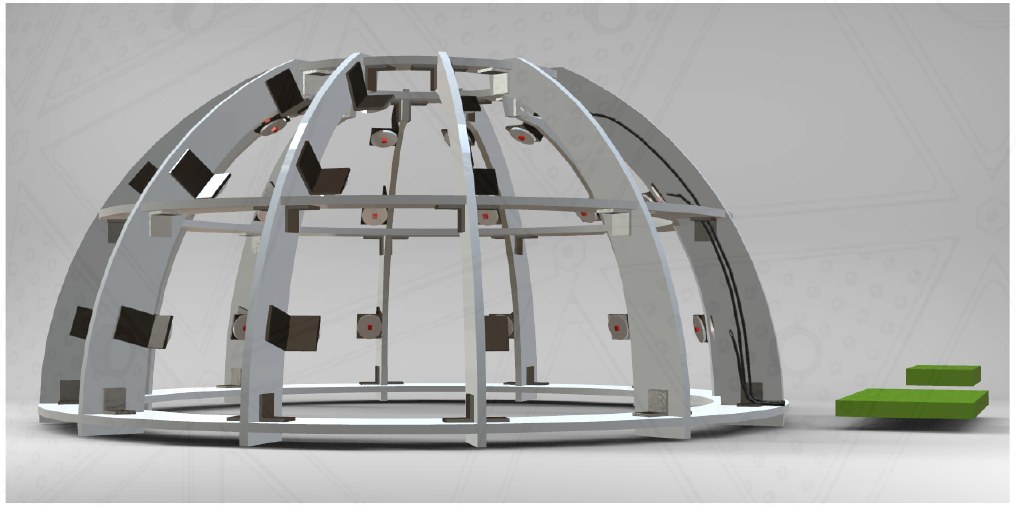
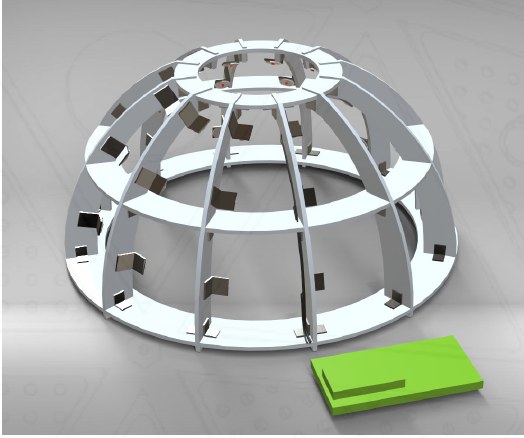
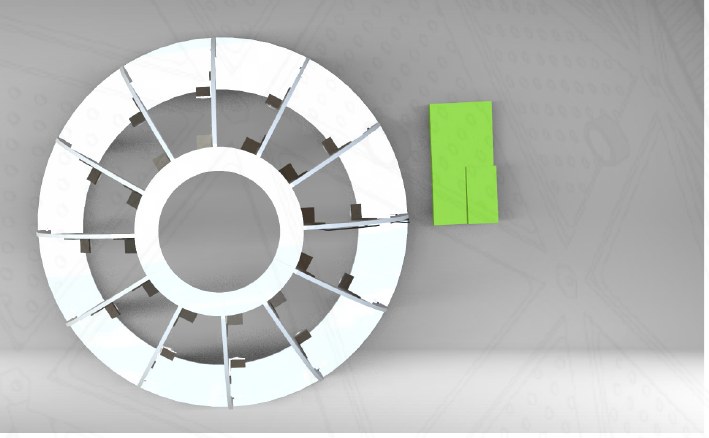
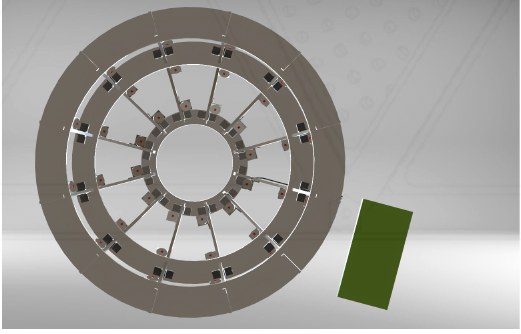
Utsuri Type 0 is a modular manual RTI dome prototype developed by miscLab. It is designed to provide a stable multi-directional lighting environment while keeping the structure simple, cost controlled, and easy to assemble, disassemble and transport. The system is independent of the camera and can work with existing digitization cameras, macro lenses, copy stands and color-management workflows for teaching, on-site assessment, and surface recording of small- to medium-sized cultural objects and artworks.
Module
Parameter / Design
Description
Structure
Modular RTI dome, inner diameter approx. 50 cm
Components are removable and replaceable, making transport easier and allowing size or function adjustments by project.
Light Source
48 LED positions, 6W each
Illuminates the object surface sequentially from multiple angles to form the lighting sequence required by RTI.
Light and Color Metrics
CRI Ra > 95, color temperature 5500K
Balances surface-structure observation with color-recording needs in cultural-heritage digitization.
Materials and Circuitry
Nylon board, LED units, dedicated PCB control circuit and external power supply
Emphasizes stability, maintainability and low complexity to reduce pressure during installation and later maintenance.
Control Method
Power switch, toggle switches and function buttons
The current version switches lights manually: capture one image, switch to the next light position, and continue until the full sequence is complete.
Operational Limits
Not yet synchronized with the camera shutter; no built-in light-shielding cover.
In actual use, a darkroom, blackout cloth or other ambient-light control is required to keep light direction and exposure stable.
III. Software and Data Workflow
The software side of an RTI system is not only a viewer. It is a complete workflow covering capture, naming, metadata, model generation, quality control and publication. According to object size, material reflectance, research goals and delivery requirements, miscLab selects appropriate RTI/PTM/HSH or relightable-image formats and integrates RTI data into existing high-precision digitization, color-management and long-term archiving workflows.
- Capture side: establish light-position sequences, file naming, exposure records, color references and project metadata so each capture can be traced and reviewed.
- Processing side: perform basic correction, light-direction calibration, RTI model generation, specular/normal enhancement tests, and checks for shadows, overexposure, glare and focus issues.
- Publication side: for research and display, data can be delivered as local viewing files or published with a WebGL viewer for interactive relighting in the browser. The Kumtura example on this page is one direction for web-based RTI presentation.
- R&D side: later stages may add camera-shutter synchronization, automatic light-position control, batch processing, project databases, web publication templates and multispectral/multimodal data integration.
IV. Suitable Objects and Use Cases
- Inscriptions, stone carvings, bricks, metal objects, seals, coins and shallow reliefs: variable lighting improves the readability of inscriptions, wear, tool marks and surface texture.
- Paper documents, manuscripts, rubbings, rare books and archives: observe impressions, erasures, paper fibers, insect damage, folds and writing traces to support interpretation and condition assessment.
- Paintings, prints, original photographs and artwork reproductions: record brushwork, paint buildup, print impressions, paper-base relief, cracks and local deformation to support reproduction, restoration and condition documentation.
- Murals, rock art and architectural surfaces: when site conditions allow, record low-relief surface information to supplement high-resolution orthophotography, 3D scanning and photogrammetry.
- Exhibition, education and remote research: turn details that were once only visible on site with moving light into interactive material that can be viewed online and reviewed repeatedly.
V. Current Development
- RTI has grown from an experimental method in cultural-heritage research into a mature surface-recording technology used in museums, archaeology, document studies and conservation. Classic PTM/HSH workflows remain lightweight and stable, suitable for long-term preservation and rapid deployment.
- Capture hardware is developing in two directions: automated, highly repeatable domes or robotic systems on one end, and low-cost portable approaches on the other, such as manual domes, movable lights, phone-assisted capture and lightweight field systems.
- Presentation is moving from desktop viewers toward web and gallery environments. Tools such as OpenLIME allow large RTI, multispectral, BRDF and other relightable images to be loaded, layered, annotated and published in the browser.
- Research frontiers include neural RTI, knowledge-distillation acceleration, complex reflectance modeling, multispectral RTI, integration with photogrammetry/3D scanning, and automated capture in hard-to-reach spaces. These improve complex-material representation and deployment flexibility, while also introducing new issues in computation cost, data standards, long-term readability and quality validation.
- For real projects, the most important direction remains verifiable workflows: stable lighting, reliable metadata, reviewable processing steps, clear delivery formats and capture strategies directly tied to conservation, research and display needs.