
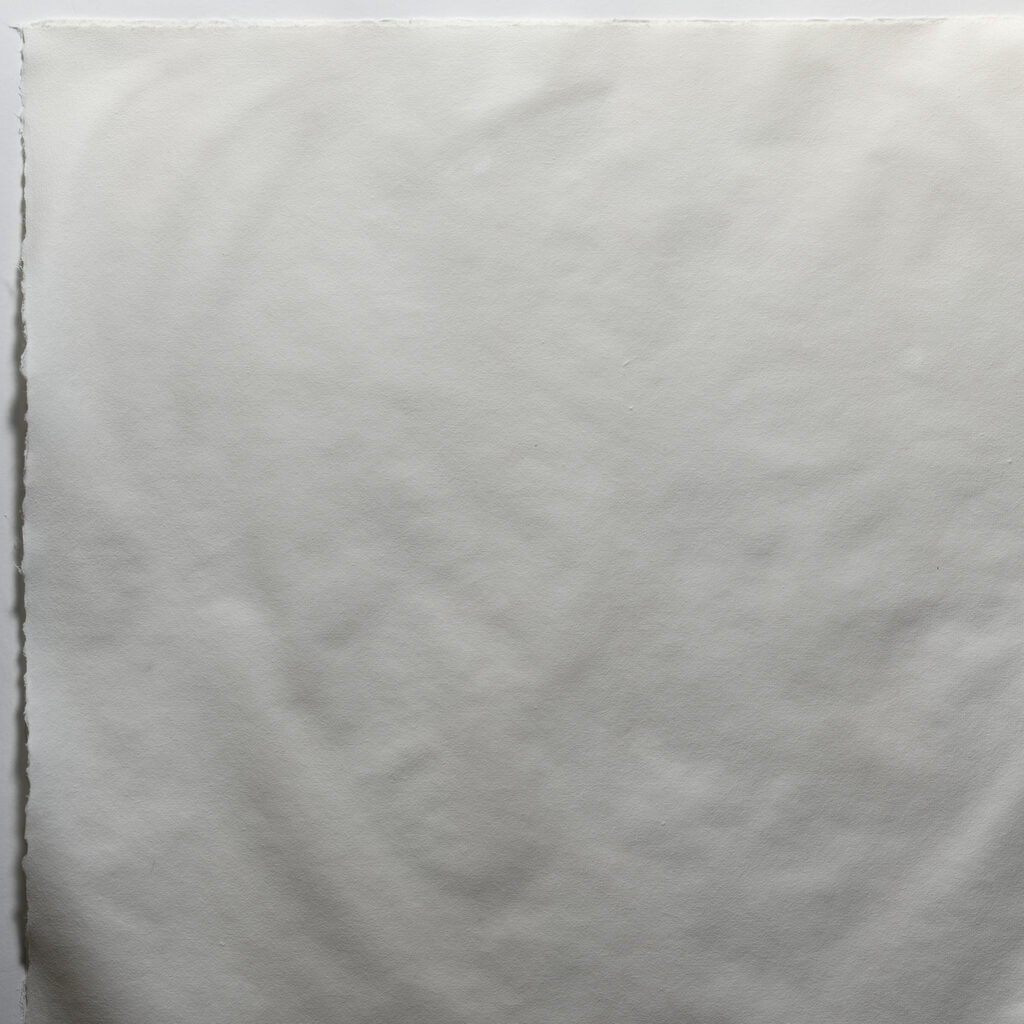
Supersampling scan sample, zoomable for paper-fiber details
PaperProject202105094135, panoramic stitched sample
Digitized by miscLab
Research Projects
Supersampling Scan
Supersampling scan is not simple file enlargement. It captures more information than the final delivery size first, then uses stitching, alignment, denoising, sharpening and color management to output the target file. In one test, we used a sheet of highly textured paper. The subject was captured as 206 images, then merged through panoramic and depth-coverage scanning into an image of about 1.35 billion pixels. We then downsampled that file to roughly 50 megapixels and compared it with a single roughly 50 megapixel capture. Even at the same final pixel count, the supersampled version kept more continuous paper-fiber texture, lower sampling noise and cleaner edges.
1.35-billion-pixel paper test
The subject was a physically small sheet of paper with dense fiber texture. A normal capture produced about 50 megapixels. The supersampling scan merged 206 local captures into a file of about 1.35 billion pixels. The source file was several gigabytes, which shows that the workflow captured far more information before final output.


Why the downsampled result still differs
After a 1.35 GP image is downsampled to 50 MP, it does not become identical to a normal 50 MP photograph. The higher source sampling density lets each output pixel be built from more real samples, so fiber direction, edges and subtle brightness changes are averaged more reliably, with less moire, random noise and interpolation error.


Detail scale and physical scale
The 33%, 50% and 100% detail views show that supersampling is not inventing texture. It records the paper surface more completely at a higher sampling density. For large prints, local enlargement, grain analysis and paper-base studies, that extra headroom gives the later workflow more room to work.


Spatial supersampling for film
For film, supersampling can be achieved through regional scanning: the negative is divided into overlapping areas, captured at a higher magnification, then geometrically aligned and stitched. The practical multiplier depends on format, lens, stage travel, overlap and final use.
- 35mm film can reach about 2x spatial supersampling by dividing one frame into four scan regions and stitching the complete image.
- 120 film can reach about 12x spatial supersampling. A common workflow divides the frame into 16 scan regions, covering the larger format while keeping enough overlap for stitching.
- 4x5 and 8x10 negatives can exceed 24x spatial supersampling, suitable for very large output, archival reproduction, and projects that need to inspect grain or emulsion structure.
Color-depth supersampling and HDR
Supersampling can also happen in color and dynamic range. The same frame can be captured through multiple exposures or repeated samples, merged into HDR data, and delivered in working formats such as 32bit Linear ProPhoto RGB. The point is not to make the image look exaggerated, but to preserve more numeric headroom for later editing.
- Shadow gradation is richer: dense negatives, dark paper objects and high-contrast transparencies tolerate lift adjustments with fewer breaks.
- Color detail is more stable: subtle color differences, dye-layer variation and paper tint are easier to keep in a wider-gamut, higher-precision linear space.
- Resolution supersampling and color-depth supersampling can be combined, giving higher effective spatial detail and more editing latitude in color.